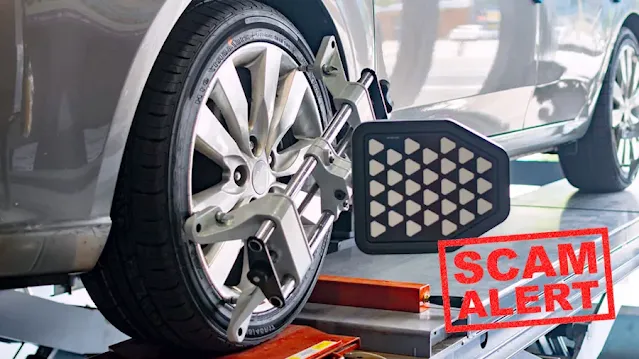
Free Alignment Check: Helpful or Tire Shop Upsell?
A free alignment check can be useful, but it can also be a sales tool. A tire shop may use an alignment rack or quick-check system to show whether your wheel angles are within factory range. If the numbers are out of spec, they may recommend a paid alignment.
The problem is not the check itself. The problem is when a shop uses a “free alignment check” to pressure you into a $99 alignment, lifetime alignment package, suspension repair, tire sale, or extra inspection you may not need. The printout matters, but your symptoms, tire wear, driving history, and repair evidence matter more.
Table of Contents
- Quick Answer: Is a Free Alignment Check Worth It?
- How a Free Alignment Check Works
- When a Free Alignment Check Is Helpful
- When It Becomes a Tire Shop Upsell
- How Much Should an Alignment Cost?
- Is $100 for an Alignment Good?
- How Much Does It Cost to Check Alignment?
- Signs of Poor Alignment
- Do You Need Alignment After New Tires?
- Is Alignment Worth It Every 15,000 Miles?
- Lifetime Free Alignment: Worth It or Trap?
- Beware of the $99 Free Check Trap
- Where Is the Best Place to Get a Wheel Alignment?
- How to Check Alignment Yourself
- How to Read the Alignment Printout
- Questions to Ask Before Approving Alignment
- Mistakes to Avoid
- Official Tire and Auto Repair Resources
- Related Upsell Guides
- Related Free Service Guides
- Related Roadside and Warranty Guides
- Bottom Line
- Frequently Asked Questions FAQ’s

Quick Answer: Is a Free Alignment Check Worth It?
Yes, a free alignment check can be worth it if you have symptoms, recently hit a curb or pothole, bought new tires, see uneven tire wear, or the steering wheel is crooked while driving straight. It gives you a starting point before paying for a full alignment.
But it can also be an upsell if your car drives straight, your tires are wearing evenly, there are no symptoms, and the shop cannot clearly explain why the alignment is needed. Do not approve work just because a printout has red numbers. Ask how far out of spec it is, whether it affects tire wear, and whether any worn suspension parts must be fixed first.
Best rule: A free alignment check is useful evidence, not automatic permission to sell you an alignment. Ask for the printout, symptoms, measurements, and an out-the-door price before approving anything.
How a Free Alignment Check Works
A tire shop can check alignment using an alignment rack, sensors, cameras, or a quick-check lane. The machine compares your wheel angles against factory specifications and may print a report showing green, yellow, or red ranges.
The most common alignment angles are toe, camber, and caster. Toe is often the biggest tire-wear angle. Camber can affect inside or outside tire wear. Caster affects steering stability and return-to-center feel.
| Alignment Angle | What It Means | Common Symptom |
|---|---|---|
| Toe | Whether tires point slightly inward or outward | Feathered or fast tire wear |
| Camber | Whether the top of the tire tilts inward or outward | Inside or outside edge wear |
| Caster | Steering axis angle that affects stability | Pulling, poor return-to-center or steering feel |
| Thrust angle | Rear wheel direction compared with vehicle centerline | Crooked steering wheel or dog-tracking feel |
Important: A check only measures alignment. It does not automatically fix anything. A paid alignment adjusts the vehicle where adjustments are available.
When a Free Alignment Check Is Helpful
A free alignment check is most helpful when there is a reason to suspect the car is out of alignment.
Good Reasons to Get a Free Alignment Check
- You hit a pothole hard.
- You hit a curb.
- The car pulls left or right on a straight road.
- The steering wheel is crooked while driving straight.
- Your tires show uneven wear.
- You just bought new tires.
- Suspension or steering parts were replaced.
- The car was in an accident.
- You feel unstable steering at highway speed.
- A mechanic found worn suspension parts.
For a deeper alignment decision guide, read Do I Need a Wheel Alignment? Dealer Scam or Real Fix?.
When It Becomes a Tire Shop Upsell
A free alignment check becomes suspicious when the shop uses it to pressure you into paid work without explaining the numbers, symptoms, tire wear, or repair need.
Upsell Warning Signs
- Your car drives straight and tires are wearing evenly, but the shop pushes alignment hard.
- The shop refuses to show the printout.
- The advisor says “red means dangerous” without explaining how far out it is.
- The shop recommends suspension parts without showing looseness or damage.
- The “free check” turns into a large estimate.
- The price changes after the car is already on the rack.
- The shop recommends lifetime alignment without asking how long you will keep the car.
- The alignment is pushed after every oil change or tire rotation with no symptoms.
Upsell warning: If the shop cannot explain the alignment printout in plain language, do not approve the work immediately.
How Much Should an Alignment Cost?
A typical wheel alignment often costs somewhere around $80 to $200, depending on vehicle type, local labor rates, one-time vs lifetime service, whether it is a two-wheel or four-wheel alignment, and whether extra adjustments or parts are needed.
Luxury cars, trucks, performance vehicles, lifted vehicles, modified suspensions, rusted adjusters, and vehicles needing calibration or suspension work can cost more. A cheap advertised price may not include all fees or may apply only to basic vehicles.
| Alignment Type | Common Price Range | Watch For |
|---|---|---|
| Free alignment check | Free to low cost | May lead to sales pitch |
| Basic one-time alignment | Often around $80 to $150 | Confirm four-wheel vs front-end |
| Four-wheel alignment | Often around $100 to $200 | Best for many modern vehicles |
| Lifetime alignment | Often higher upfront | Read limits, exclusions and transfer rules |
| Modified or rusted vehicle | Can cost more | May need parts or extra labor |
Is $100 for an Alignment Good?
Yes, $100 can be a good price for a standard alignment if it includes the correct alignment type for your vehicle, before-and-after printout, reasonable warranty, and no hidden fees. It is less attractive if it is only a front-end alignment on a vehicle that needs a four-wheel alignment, or if the shop adds fees after inspection.
$100 Is More Reasonable If
- It includes a before-and-after printout.
- It matches your vehicle type.
- The shop checks tire pressure first.
- The shop checks for worn parts before adjusting.
- The final price is clear before work begins.
- There is a short alignment warranty or recheck period.
$100 May Not Be a Good Deal If
- The shop refuses a printout.
- It does not include the needed wheels.
- The vehicle has worn parts that make alignment pointless.
- The price jumps after “fees.”
- The shop pressures you into parts without proof.
How Much Does It Cost to Check Alignment?
Many tire shops and repair shops offer free alignment checks, especially during tire purchases, tire rotations, inspections, or promotional events. Other shops may charge a small inspection fee or roll the check into a paid alignment service.
A free check is not automatically bad. It becomes a problem only when the shop uses the check to sell work you do not need or refuses to give you the alignment numbers.
Signs of Poor Alignment
The best reason to get an alignment is not a coupon. It is a symptom, tire-wear pattern, impact, or repair that makes alignment likely.
Common Signs Your Car May Need Alignment
- Car pulls to one side on a straight road.
- Steering wheel is crooked when driving straight.
- Tires show inside-edge or outside-edge wear.
- Tires feel feathered when you run your hand across the tread.
- Vehicle feels unstable or wanders.
- Steering does not return to center normally.
- New tires are wearing unevenly.
- The car recently hit a curb or pothole.
- Suspension or steering parts were replaced.
Check first: Low tire pressure can mimic alignment symptoms. Check tire pressure before paying for alignment.
Do You Need Alignment After New Tires?
You do not always need an alignment after new tires, but it is often smart to check alignment before or shortly after installing expensive tires. A bad alignment can ruin new tires quickly, and tire warranties may not cover wear caused by poor alignment, underinflation, or neglected rotation.
If your old tires wore evenly and the car drives straight, a check may be enough. If the old tires had uneven wear, the steering wheel is crooked, or the car pulls, get the alignment before putting many miles on the new tires.
How Long Can You Drive on New Tires Before Alignment?
There is no exact safe number. If the old tires were wearing unevenly or the car pulls, get the alignment as soon as possible. Driving hundreds or thousands of miles on new tires with bad alignment can start permanent wear patterns.
Is Alignment Worth It Every 15,000 Miles?
An alignment check every 15,000 miles can be reasonable if it is free, you drive on rough roads, or you are trying to protect expensive tires. But paying for an alignment every 15,000 miles without symptoms, tire wear, impact, or out-of-spec measurements may be unnecessary.
Use tire wear, steering feel, printout results, and driving conditions to decide. Do not approve a paid alignment just because a mileage interval appeared on a shop menu.
Lifetime Free Alignment: Worth It or Trap?
A lifetime alignment plan can be worth it if you keep the car for several years, drive on rough roads, buy tires from the same shop, or expect to need repeated adjustments. It can be a trap if you sell the car soon, rarely need alignments, ignore the fine print, or the plan excludes the work you actually need.
Lifetime Alignment May Be Worth It If
- You plan to keep the car for years.
- You drive many miles.
- Your roads are rough.
- You buy tires from the same shop.
- You can return for regular checks.
- The terms are clearly written.
Read the Fine Print For
- Transfer rules
- Vehicle ownership limits
- Modified suspension exclusions
- Commercial-use exclusions
- Required tire or suspension repairs
- Recheck limits
- Whether only adjustments are included
- Whether worn or seized parts cost extra
Lifetime alignment answer: It is not “free” if you paid extra upfront. It is prepaid service. It only saves money if you actually use it and the terms fit your car.
Beware of the $99 Free Check Trap
The common trap starts with a free check, then turns into a quick $99 alignment recommendation, then becomes a much larger estimate after the shop finds worn parts, seized adjusters, tire damage, or “required” services.
A $99 alignment can be fair. The trap is not the price itself. The trap is approving work before you understand whether the car truly needs alignment and whether the alignment will actually fix the problem.
Protect Yourself
- Ask for the alignment printout.
- Ask which angle is out of spec.
- Ask whether the issue affects tire wear or steering.
- Ask whether tire pressure was checked first.
- Ask whether worn parts must be fixed before alignment.
- Ask for the full out-the-door price.
- Decline add-ons that are not clearly explained.
- Get a second opinion if the estimate becomes large.
Do not rush: A red number on a printout does not mean you must approve every repair the shop recommends.
Where Is the Best Place to Get a Wheel Alignment?
The best place for a wheel alignment is usually a reputable tire shop, alignment specialist, suspension shop, or repair shop with modern equipment and technicians who can explain the printout. Dealerships can also be good, especially for newer vehicles under warranty, but they may cost more.
Good Alignment Shops Usually Provide
- Before-and-after printout
- Clear explanation of red and green numbers
- Tire pressure check before alignment
- Suspension inspection before adjustment
- Fair price disclosed before work
- No pressure to buy unrelated services
- Experience with your vehicle type
- Written warranty or recheck policy
Local specialty tire and suspension shops can be more transparent than quick-lube locations that mainly use the check as a sales tool. The best shop is the one that gives evidence, not pressure.
How to Check Alignment Yourself
You cannot fully align a modern car accurately at home without proper equipment, but you can check for warning signs before visiting a shop.
DIY Alignment Clues
- Check tire pressure on all four tires.
- Drive on a flat road and see if the car pulls.
- Look at whether the steering wheel is centered.
- Inspect tires for inside-edge or outside-edge wear.
- Run your hand across tread blocks and feel for feathering.
- Check for uneven wear between left and right tires.
- Look for bent or damaged suspension parts after impacts.
- Listen for clunks over bumps.
- Check whether the car wanders at highway speed.
DIY limit: Home checks can tell you something may be wrong. They cannot replace a proper alignment rack and printout.
How to Read the Alignment Printout
An alignment printout usually shows before and after measurements. Green typically means within specification. Red usually means outside specification. Yellow may mean close to the limit depending on the machine.
Do not panic just because one number is red. Ask whether it is slightly out or severely out, whether it can be adjusted, and whether it matches your tire wear or symptoms.
Ask the Shop to Explain
- Which wheel is out of spec?
- Which angle is out: toe, camber, caster, or thrust angle?
- How far out is it?
- Can it be adjusted on this vehicle?
- Is a worn part preventing adjustment?
- Will this cause tire wear?
- Will this fix the pull or crooked steering wheel?
- What are the after-adjustment numbers?
Questions to Ask Before Approving Alignment
Question 1: Can I see the printout?
A shop recommending alignment should be willing to show the measurements.
Question 2: Which angles are out of spec?
Ask whether the issue is toe, camber, caster, or thrust angle.
Question 3: Is the tire pressure correct?
Incorrect tire pressure can affect steering feel and tire wear.
Question 4: Are any suspension parts loose?
Loose tie rods, ball joints, control arms, or bushings can make alignment useless until repaired.
Question 5: Is this a front-end or four-wheel alignment?
Many modern vehicles need four-wheel alignment checks.
Question 6: What is the final price?
Confirm labor, fees, taxes, parts, and any warranty.
Question 7: What happens if I decline today?
If there is no safety issue, you can often compare prices or get a second opinion.
Mistakes to Avoid
- Approving alignment without a printout. Ask for proof.
- Ignoring tire pressure. Low pressure can mimic alignment issues.
- Buying alignment after every service visit. Use symptoms, tire wear, or measurements.
- Skipping alignment after suspension repairs. New parts often require alignment.
- Putting new tires on a car with obvious uneven wear. You may ruin the new tires.
- Buying lifetime alignment without reading terms. It may not fit your situation.
- Approving suspension repairs without evidence. Ask to see looseness, wear, or damage.
- Ignoring a crooked steering wheel. That can be a real alignment symptom.
- Confusing balancing with alignment. Balancing fixes vibration; alignment fixes wheel angles.
- Working only from a coupon price. The final out-the-door price matters.
Official Tire and Auto Repair Resources
- NHTSA Tire Safety
- NHTSA Tire Equipment Information
- FTC Auto Repair Basics
- AskMechanics Discussion: Why Is Everyone Pushing Alignment These Days?
- Wheel Alignment Upsell Scams to Watch Out For at the Shop
Related Upsell Guides
- Do I Need a Wheel Alignment? Dealer Scam or Real Fix?
- Fuel System Cleaning Service: Does It Actually Work or Is It Just an Upsell?
- Dealer Maintenance Upsells: Services You May Not Need
- Why Free Inspections Are the Biggest Rip-Off in Auto Repair Right Now
- Why Is My Car Repair Estimate So High?
Related Free Service Guides
- Advance Auto Free Diagnostic: What They Check
- AutoZone Free Battery Test: What It Can Tell You
- AutoZone Free Diagnostic: What It Can and Cannot Diagnose
- Free Car Diagnostic Test: What Stores Check
- O'Reilly Free Check Engine Light Test
- Fix Flat Tires for Free: Where to Get Free Tire Repair
- How to Dispose of Used Motor Oil Properly and Free
- Tire Rotation Cost: Free Tire Rotation vs Dealer Prices
Related Roadside and Warranty Guides
- AAA Fuel Delivery: Is the Gas Free?
- AAA Jump Start Service: Is a Dead Battery Free?
- AAA Towing Cost: Is Free Towing Really Free?
- Car Battery Warranty Explained: Free vs Prorated
- How to Check for Vehicle Recalls by VIN: Free Recall Lookup Guide
Bottom Line
A free alignment check can be helpful when you have symptoms, uneven tire wear, new tires, pothole impact, steering problems, or recent suspension work. It becomes an upsell when the shop pressures you without showing the printout, explaining the numbers, or connecting the recommendation to a real problem.
Best answer: Get the free check if there is a reason, but do not approve alignment until you see the measurements, understand the problem, confirm the final price, and know whether any worn parts must be repaired first.
Frequently Asked Questions FAQ’s
Does anyone do free alignment checks?
Yes, many tire shops and repair shops offer free alignment checks, especially with tire purchases, inspections, rotations, or promotions. Always ask for the printout before approving paid work.
Is $100 for an alignment good?
Yes, $100 can be a good price for a standard alignment if it includes the right service for your vehicle, a printout, clear pricing, and no hidden fees.
How much should an alignment usually cost?
A typical alignment often costs around $80 to $200 depending on vehicle type, local labor rates, one-time vs lifetime service, and whether extra parts or labor are needed.
Can a tire shop check alignment?
Yes, tire shops commonly check alignment using an alignment rack or quick-check system. A good shop should provide measurements and explain whether adjustment is actually needed.
Is a wheel alignment check worth it?
It is worth it if you have pulling, crooked steering, uneven tire wear, new tires, pothole damage, or recent suspension work. It may be unnecessary if there are no symptoms and tire wear is even.
How much does it cost to check your alignment?
Some shops check alignment for free, while others charge a small inspection fee or include the check in a paid alignment. Confirm the price before the car goes on the rack.
Is an alignment really worth it after every 15,000 miles?
A check every 15,000 miles can be useful, especially if it is free. Paying for alignment every 15,000 miles is not always necessary unless the car is out of spec or shows symptoms.
What are the signs of poor alignment?
Common signs include pulling, crooked steering wheel, uneven tire wear, feathered tread, wandering, unstable steering, or tire wear after hitting a curb or pothole.
Where is the best place to get a wheel alignment?
A reputable tire shop, alignment specialist, suspension shop, or dealership with modern equipment and clear printouts is usually best. Choose a shop that explains the numbers without pressure.
How do I check my alignment myself?
You can check for clues such as pulling, crooked steering, uneven tire wear, feathered tread, and incorrect tire pressure. A full alignment measurement requires proper alignment equipment.